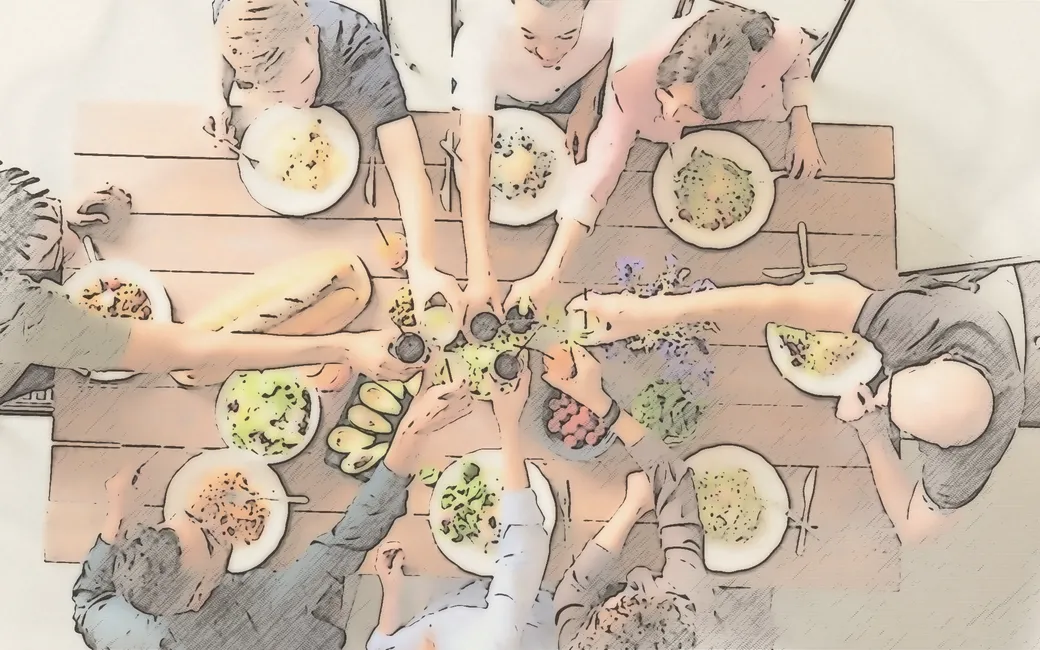
Friendsgiving is a Thanksgiving-style meal shared with friends, usually on the weekend before or after Thanksgiving. The easiest way to host one is a potluck: you cook one main dish, guests sign up for sides, drinks and dessert, and you keep it to six to ten people. Add one small tradition, like a question at every place or a group photo, and it starts to feel like an annual thing.
In this post
- What is Friendsgiving?
- When is Friendsgiving in 2026?
- How to host Friendsgiving: an easy plan
- Friendsgiving food ideas
- Friendsgiving games and things to do
- Low-effort Friendsgiving themes
- An invitation and sign-up you can copy
- Small touches that make it feel special
- Friendsgiving on a budget
- If you don’t have a group to invite yet
- Where StillHuman fits
- Questions people ask
What is Friendsgiving?
Friendsgiving is a Thanksgiving-style meal you share with friends instead of, or as well as, family. It usually happens on a weekend close to Thanksgiving, and it’s often a potluck where everyone brings a dish. Merriam-Webster added the word to its dictionary in January 2020; its first known use is from 2007.
It started as a way for people who couldn’t travel home to have a proper holiday meal anyway. Now plenty of people do both: family on Thursday, friends on Saturday.
When is Friendsgiving in 2026?
Thanksgiving 2026 is on Thursday 26 November. Most Friendsgivings fall on:
- The weekend before: Saturday 21 or Sunday 22 November. This is the most popular choice, because people are still in town.
- The Saturday after: 28 November, for friends who are home from their family Thanksgiving with leftovers to share.
- Any evening that week if your group is staying put.
Send the invitation two to three weeks ahead. Late November weekends fill up fast.
How to host Friendsgiving: an easy plan
You don’t need a big table or a perfect turkey. You need a date, a sign-up list and one person (you) who says “let’s do it”.
- Pick the date and the guests. Six to ten people is the sweet spot: big enough to feel like a party, small enough for one conversation around the table.
- Decide what you’ll make. The host usually covers the main dish and the drinks basics. That can be a turkey, a roast chicken, a big tray of lasagne or a vegetarian centrepiece.
- Make a sign-up list. Split it into sides, salads, bread, desserts and drinks so you don’t end up with four pies and no potatoes. A shared note or the group chat works fine.
- Ask about food needs early. Vegetarian, vegan, gluten-free, allergies. Put them on the sign-up list so people plan around them.
- Sort the seating. Borrow chairs, use the sofa, or go floor-picnic style. Nobody minds if the plates don’t match.
- Set a start time and a food time. “Come from 4, we eat at 5” gives late arrivals some slack and stops the food going cold.
- Plan one small tradition. It’s what turns a dinner into the thing everyone asks about next year. There are ideas below.
Friendsgiving food ideas
Mains
- Roast turkey crown or turkey breast, which cooks far faster than a whole bird
- Roast chicken or two: easier, cheaper, and nobody complains
- Glazed ham, which can be cooked a day ahead
- A big lasagne or baked pasta for a crowd
- Stuffed squash or a mushroom wellington for vegetarians
Sides that travel well
- Mac and cheese in a deep tray
- Roast potatoes, mashed potatoes or sweet potato bake
- Green beans with crispy onions
- Stuffing, baked in its own dish
- Cranberry sauce, which is easy to make two days ahead
- Honey-roasted carrots and parsnips
- A big autumn salad with apple, nuts and cheese
- Cornbread or a stack of warm rolls
Desserts
- Pumpkin pie, apple pie or pecan pie
- An apple crumble that someone can reheat in your oven
- A tray of brownies or blondies
- A “pie ranking”: everyone brings a different shop-bought or homemade pie and you vote
Drinks
- One big-batch drink, like mulled cider or a punch, so you’re not making cocktails all night
- Sparkling water with something in it for people who aren’t drinking
- Coffee and tea for the dessert slump
Tip: ask anyone who has a short journey to bring hot dishes, and anyone travelling further to bring salads, bread, drinks or desserts.
Friendsgiving games and things to do
The best Friendsgiving activities are the ones you can do around the table or on the sofa after eating.
- A question at every place. Write one question on each place card, like “What’s the best thing that happened to you this year?” Our Friendsgiving questions have dozens to choose from.
- The thankful jar. Everyone writes one thing they’re grateful for, anonymously. Read them out over dessert and guess who wrote which.
- Two truths and a lie. Simple, works with mixed groups, and you’ll learn something new about friends you’ve known for years.
- Pie (or stuffing) ranking. Blind taste test, score cards, a winner’s crown made of paper.
- Friend-group trivia. Before the day, collect a fact from each guest (first job, worst holiday, weirdest food they love) and quiz everyone over dessert.
- Desert island leftovers. If you could only eat one dish from the table for a month, which would it be?
- The playlist. Everyone adds three songs to a shared playlist before the day. Play it on shuffle and guess who picked each one.
- A board game or card game for the slow hour after dinner.
- A walk. Twenty minutes outside between dinner and dessert does wonders.
- The group photo. Same spot, same pose, every year. In five years it’s the best thing you own.
Low-effort Friendsgiving themes
A theme is optional, but an easy one gives people something to laugh about. Keep it to things guests already own:
- Cosy jumper night: everyone wears their best knitwear.
- A dish from home: everyone brings something from where they grew up, and tells its story.
- Decades: food, music and outfits from one decade.
- Breakfast for dinner: pancakes, waffles and a turkey-and-cranberry fry-up.
- First letter of your name: each guest brings a dish that starts with their initial.
- Pie night: no main course at all, just pies, savoury and sweet.
An invitation and sign-up you can copy
Send the first one two to three weeks ahead, and the second once people have said yes:
Friendsgiving at mine on Saturday 21 November! Come from 4, we eat at 5. I’ll do the turkey and drinks; bring a side, dessert or something to drink. Who’s in?
Sign-up time! Reply with what you’re bringing: sides, salad, bread, dessert or drinks. Any food allergies or vegetarians, tell me now.
Small touches that make it feel special
- Handwritten name cards (they double as the place for your question)
- Candles, a few small pumpkins, leaves from outside: that’s your decoration done
- Takeaway boxes by the door so guests can take leftovers home
- A notebook that comes out every year, where everyone writes one line about their year
- A toast. It doesn’t need to be long: “To the people who turned up.”
Friendsgiving on a budget
- Make it a true potluck, including the main dish if needed.
- Cook a chicken or a ham instead of a turkey.
- Ask everyone to bring their own drinks.
- Borrow plates and chairs instead of buying disposables.
- Do dessert-only Friendsgiving: pies, coffee and games from 7pm.
If you don’t have a group to invite yet
A lot of people search for Friendsgiving ideas because they won’t be with family this year and don’t have a big friend group nearby. You can still host one. Invite a mix: a coworker you like, a neighbour, someone from your class or club, and ask each of them to bring one person. Shared meals are one of the quickest ways to turn acquaintances into friends, because friendship is mostly built from time together: research by Jeffrey Hall at the University of Kansas suggests it takes about 50 hours to go from acquaintance to casual friend. A long dinner is a good start on those hours.
If you’re away from family on the day itself, our guide to spending Thanksgiving alone or away from family has more ideas.
Where StillHuman fits
StillHuman puts you in a small circle of about six people who want new friends too, with one easy question to answer each day. It’s a good way to get to know people before you invite them to anything, and the questions work at the dinner table too. It’s free.
Questions people ask
What do you do at a Friendsgiving?
Most Friendsgivings are a shared meal followed by something relaxed: games, a walk, dessert and conversation. Many groups add a small tradition, like saying what they’re thankful for, answering a question at each place setting or taking the same group photo every year.
What should I bring to Friendsgiving?
Bring whatever the host asks for on the sign-up list. If there isn’t one, a side dish that’s easy to reheat, a dessert, a bag of ice or a bottle of something are always welcome. Bring it in a dish you don’t need back, or label yours.
Who pays for Friendsgiving?
Usually nobody pays anybody. The host covers the main dish and the space, and everyone else brings a dish or drinks. If the host buys an expensive turkey, it’s fine for guests to chip in.
When is Friendsgiving 2026?
There’s no official date. Thanksgiving 2026 is on Thursday 26 November, so most people hold Friendsgiving on the weekend before (21–22 November) or the Saturday after (28 November).
How many people should you invite to Friendsgiving?
Six to ten people is easiest for a first Friendsgiving. It fits most homes, it’s manageable to cook for, and everyone can join the same conversation.
What should I wear to Friendsgiving?
Something comfortable you can eat a lot in. Most Friendsgivings are casual: jeans and a cosy jumper are perfect. If the host has picked a theme, like decades or cosy knitwear night, join in; it’s half the fun.
Can you do Friendsgiving as a brunch?
Yes, and it’s easier for many groups. A Friendsgiving brunch might be pancakes or waffles, a turkey-and-cranberry fry-up, a frittata, pastries and pumpkin-spiced coffee. It suits people who are travelling to family later in the day.

The StillHuman team
We make StillHuman, a small, calm app for keeping up with friends and family: one easy question a day, a journal and a small circle of real people.