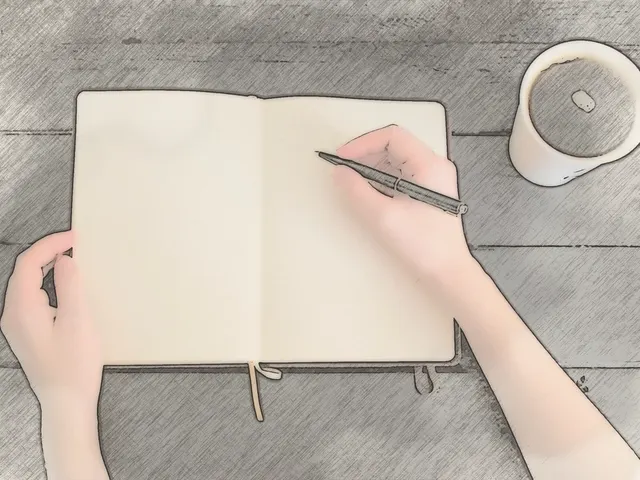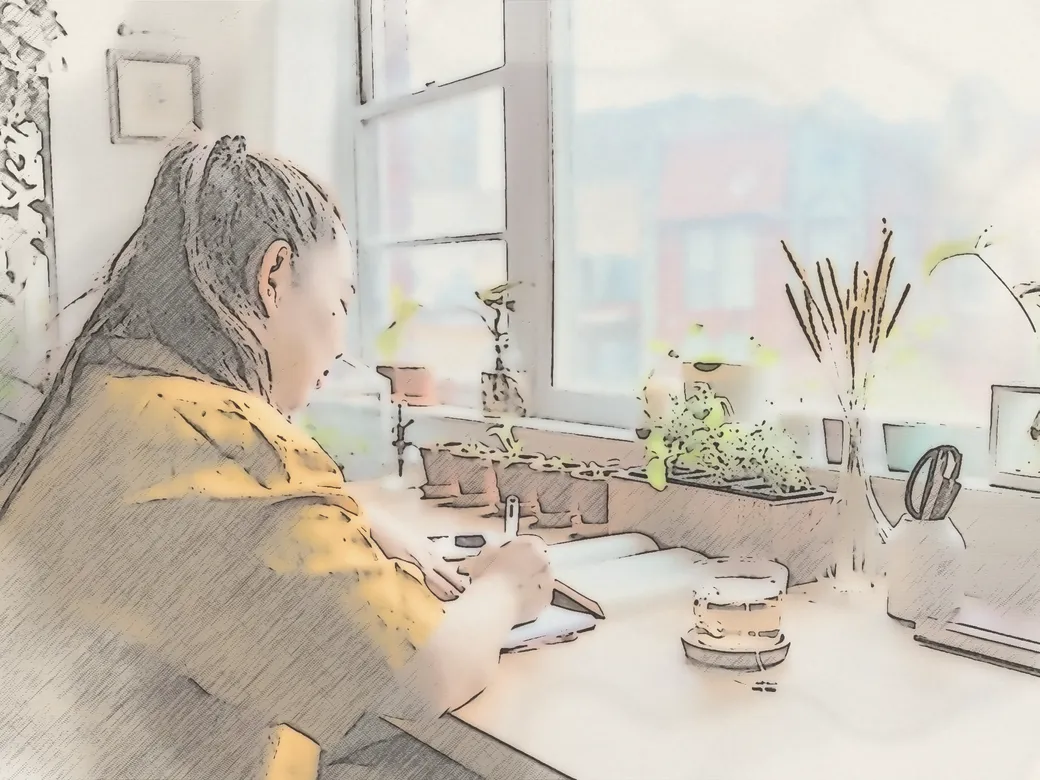
To start journaling, pick a notebook or app you like, choose a time you already have (the first coffee or the last ten minutes before bed), and write three short things about today: what happened, what you noticed and how you felt. Keep entries short, skip days without guilt, and use a prompt when the page is blank. A small habit you keep beats a long entry you dread.
In this post
- Why most journals stop at page three
- Step 1: choose something you’ll enjoy opening
- Step 2: attach it to something you already do
- Step 3: start with three lines
- Step 4: use a prompt when the page is blank
- Your first week, one prompt a day
- Step 5: make it yours
- Step 6: skip days without guilt
- Step 7: read it back once a month
- What to write about, if you’re not sure
- Different kinds of journal to try
- A journal that feels like paper, in your pocket
- Questions people ask
Why most journals stop at page three
Almost everyone has a notebook somewhere with three entries in it. The first one is long and hopeful. The second is shorter. The third apologises for not writing. Then nothing.
It usually isn’t a lack of discipline. It’s that the first entry set the bar too high. If journaling feels like homework, you’ll stop doing it. The trick is to make it small enough that it’s easier to write than to skip.
Step 1: choose something you’ll enjoy opening
Paper or app, it doesn’t matter; what matters is that you like it. Some people love a heavy notebook and a good pen. Others want something on their phone, because their phone is always with them. If you want both feelings at once, an app that looks like paper is a good middle ground.
A few things worth considering:
- Paper is private by nature, distraction-free and lovely to flip back through.
- An app is always with you, can hold photos and voice, and is searchable.
- Either way, keep it somewhere you’ll see it every day.
Step 2: attach it to something you already do
New habits stick when they ride on old ones. Write while the kettle boils, with your first coffee, on the train home, or in bed before you turn off the light. You don’t need extra time; you need a cue you already have.
Step 3: start with three lines
For the first two weeks, write just three lines:
- One thing that happened today.
- One thing you noticed.
- One thing you felt.
That’s it. Some days you’ll keep going. Most days you won’t, and that’s fine. You’re building the habit of opening the journal, not writing a novel.
Step 4: use a prompt when the page is blank
Blank pages are the main reason people stop. Keep a few prompts ready, like “What made you smile today?” or “Who did you talk to today?”. We’ve collected 100 journal prompts for every kind of day for exactly this.
Your first week, one prompt a day
If you’d like a plan to follow, here’s a gentle first week. Each one takes a few minutes.
| Day | Prompt |
|---|---|
| 1 | What happened today, in three lines? |
| 2 | What made you smile today? |
| 3 | Who did you talk to today, and what about? |
| 4 | What’s on your mind that you haven’t said out loud? |
| 5 | What are you looking forward to? |
| 6 | What did you notice today that you’d usually miss? |
| 7 | Read back your week. What surprised you? |
Step 5: make it yours
People keep journals they’re fond of. Add a photo from the day, a ticket, a doodle, a sticker, a quote someone said. Change your handwriting style when the mood changes. A journal that looks like you is one you’ll want to return to. If you need ideas, look at some aesthetic journal ideas for layouts that take two minutes.
Step 6: skip days without guilt
Missing a day doesn’t break anything. Neither does missing a week. Don’t write a catch-up entry or an apology; just start with today. The people who keep journals for years aren’t the ones who never miss; they’re the ones who come back.
Step 7: read it back once a month
The magic of a journal shows up later. Set a reminder for the first of each month and read last month’s pages. You’ll find small things you’d already forgotten, and that’s usually what makes people keep going.
What to write about, if you’re not sure
- What you did, ate and saw today.
- A conversation you keep thinking about.
- Something you’re looking forward to.
- A small win, however small.
- What’s on your mind before you sleep.
- A list: songs, books, places, people you’re glad about.
Different kinds of journal to try
A daily log. A few lines a day about what happened. Easiest to start.
A one-line-a-day journal. One sentence for each day, sometimes over several years on the same page, so you can see how each date went in different years.
A gratitude journal. Three things you’re thankful for. Our gratitude prompts give you thirty to start with.
A photo journal. One photo a day with a line underneath. Great if you think in pictures.
A shared journal. Answering the same question as a few friends or family members, so you get to read their answers too.
A journal that feels like paper, in your pocket
StillHuman’s journal lets you write a full page, drop up to twelve photos between your lines, choose from paper styles and handwritten-style fonts, and decorate it with stickers. It’s private by default, and you can export a page as a picture or PDF if you want to share one. It’s free, and it works in any browser.
Questions people ask
How do I start journaling for beginners?
Choose a notebook or app, pick a time you already have every day, and write three short lines: something that happened, something you noticed and something you felt. Use prompts when you’re stuck, and keep it short for the first few weeks.
How do you start a journal entry?
Start with the date and one plain sentence about today, like “Today I…” or “Right now I’m…”. Then add what you noticed and how you felt. If you’re stuck, answer a prompt instead; the first line is the hardest, and a question takes care of it.
What should I write on the first page of my journal?
Keep the first page light so it doesn’t set the bar too high. Write your name and the date, a few lines about where you are in life right now, and what you hope to use the journal for. Some people leave it blank and start on page two, which works too.
What is the best time of day to journal?
The time you’ll stick to. Bedtime is popular because the day is over and it’s easy to look back; mornings suit people who like to plan. Linking it to an existing habit matters more than the hour.
Should I journal on paper or in an app?
Paper is private and calm; an app is always with you and can hold photos and voice notes. Choose whichever you’ll open more often. You can always switch.
How do I keep my journal private?
Keep a paper journal somewhere only you go, or use an app that’s private by default and needs your sign-in. Avoid writing anything you’d hate to lose in a shared or unlocked place.
How do I start journaling every day?
Tie it to something you already do daily, like your first coffee or getting into bed, and keep the bar tiny: three lines counts. Daily habits survive on being easy, not on being long. If you miss a day, just carry on the next one.
How do I start a gratitude journal?
Each day, write down three things you’re grateful for, and be specific: “the sun on the walk to work” beats “the weather”. It takes two minutes. Some people do it at night as a way to end the day on something good.

The StillHuman team
We make StillHuman, a small, calm app for keeping up with friends and family: one easy question a day, a journal and a small circle of real people.